
By Alana Ireland
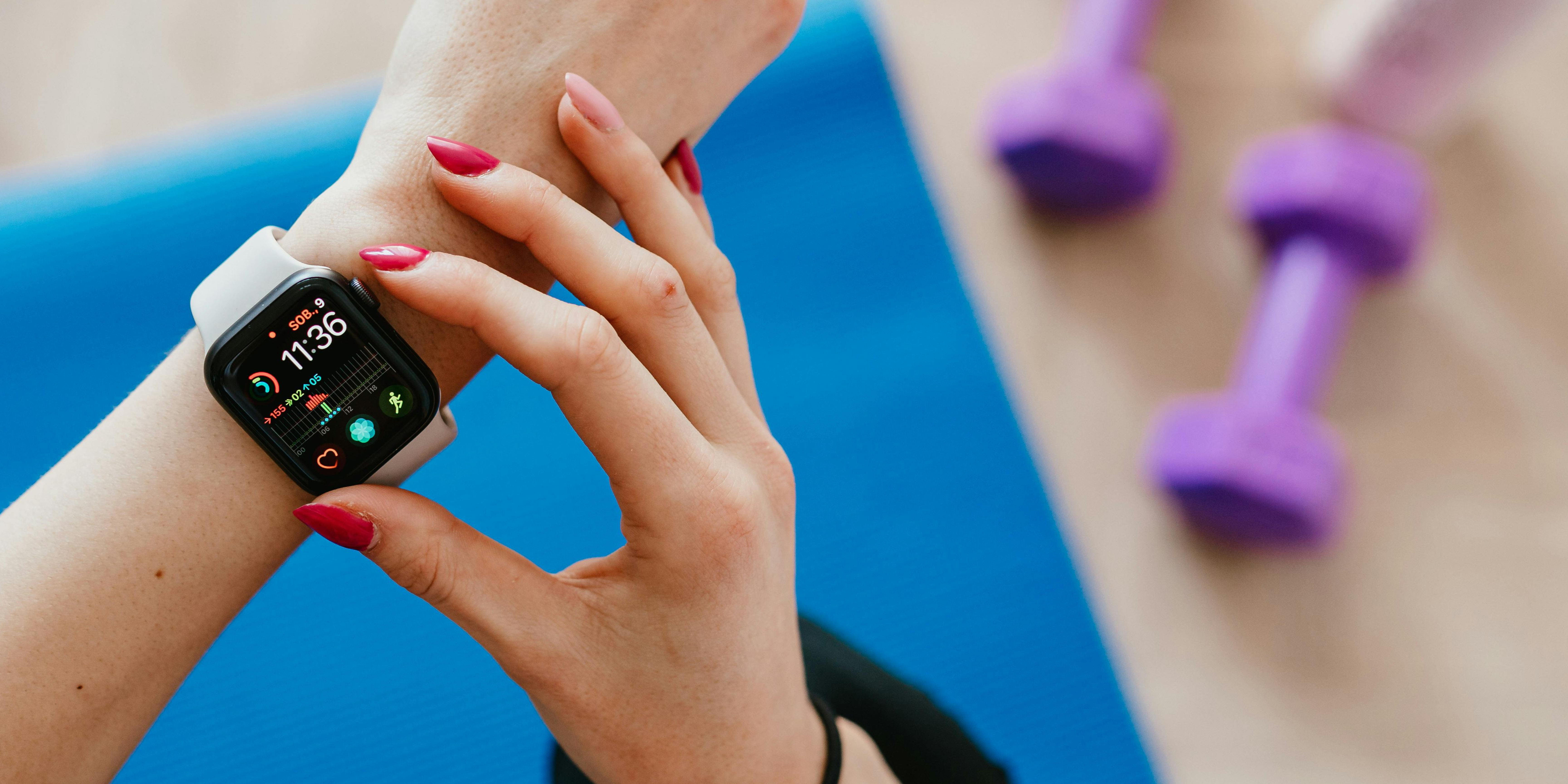
When it comes to bodies and “health,” almost everything can be measured, tracked, or calculated. Numbers are used as indicators of health everywhere: on our phones, in conversation, and in the doctor’s office. How many steps did you get? How many standing hours today? How many glasses of water did you drink? How many calories did you eat? How many calories did you burn? Are you counting your macros? What’s your BMI? How about your percentage of body fat? The list is endless. If you are feeling overwhelmed by all the numbers, you aren’t alone. Health has become synonymous with numbers, and there’s something that feels so good about closing our rings. But is it always to our benefit?
It’s no longer enough to take a walk, now it has to be 10,000 steps. It’s not enough to eat a nourishing meal, we must track the calories, protein, carbs, and fat. Calculations tell us whether we should eat, what we should eat, if we are moving enough, and if our bodies are too much. The message is, if you want to be healthy, you need to know the numbers. If the number is not right… somehow all our positive efforts feel like a failure. In an effort to measure up, we may have lost touch with something incredibly important: how we feel.
But what happens when we let go of the metrics?
What if we challenged ourselves to embrace health without measurement? What if a healthy lifestyle and body wasn’t about data, but about our values, connection, and what feels good in our bodies?
Letting Go of the Numbers
Stopping tracking won’t mean we will all become the worst versions of ourselves. Despite what influencers or advertisers would have us believe, “showing up for ourselves everyday” isn’t about keeping a close eye on all the numbers. If we stop focusing on the numbers, we have time and energy to focus on what really matters. We could celebrate over a meal out with friends without worrying about macros or calories. We could move for joy without worrying about tracking “progress” or “progressive overload,” and we wouldn’t have to feel like a prisoner to fitness apps. Instead, we could tune into our bodies and ask “what kind of care do you need today?” and we would free up the headspace and time to feel like we can actually provide it. It makes me think of the quote often misattributed to Gloria Steinem: “Imagine we spent all that time we spend thinking about our bodies on something else. We’d be unstoppable.” Instead (or perhaps in addition), I suggest: “Imagine we spent all that time we spend tracking our ‘health,’ on something else. We might truly be healthy.” Body and mind.
Health Tracking: Is it Always Right?
This may feel radical in today’s culture, but the truth is: we don’t need all the numbers to have a healthy body. Many of the metrics we use as indicators of health are arbitrary, not personalized, and pursuing them may even contribute to poorer health. For example, BMI fails to account for body composition, and its adoption has done little for health. In an article in the American Medical Association Journal of Ethics, a prominent medical scientist, Katherine M. Flegal, shared how we have misused BMI. Its use has contributed to weight-based discrimination, and what we have been told is a “healthy” BMI was driven by pharmaceutical companies seeking profits. (Check back for another blog about the issues with BMI) How did we come to think 10,000 steps is the magic number for health? Research suggests that more steps per day is indeed associated with less health risk, but the benefits begin long before 10,000 steps, and level off around 7,500. There is also evidence that counting calories and the use of fitness tracking apps may contribute to eating disorders and unnecessary restriction.
When we fixate on tracking and numbers, a subtle but profound shift occurs. The intention behind our pursuit of health changes. What began as a desire to care for our body, turns into a need to “perform” to achieve a specific number. We start chasing metrics, instead of actual health.
The Impact of Health Tracking on Behavior
Health psychology has taught us that tracking isn’t all bad though. Collecting data can be a helpful tool in the beginning, and may even contribute to positive behaviour change without even intending to adopt a new healthy habit yet. For example, Compernolle and colleagues described how merely tracking sedentary time may contribute to a reduction in time spent not moving. Self-monitoring can help us become aware of our habits and orient us toward change. That said, what might also happen is this:
- We start tracking.
- We notice progress (or not).
- We become attached to the numbers.
- We stop listening to our bodies.
Or this:
- We decide on a number we must reach (often based on popular messaging, not evidence).
- We do all the things we are told to do to reach that number or achieve “success” (some healthy, some not).
- That number isn’t reasonable for our body.
- We determine we have failed, and we discontinue any actually healthy habits we adopted because they “don’t work.”
It’s no longer really about health, it’s about whether or not we meet the goal we set on our watch. It’s not about what our body craves or what would be satisfying to eat, it’s about hitting our macros. It’s not about connecting with our bodies, it’s about controlling them. Although it may be subtle, and we might not even notice at first, tracking with the intention of chasing a number can take us further away from our bodies and health, not closer.
Metrics Aren’t Morally Superior
It’s important to recognize that it isn’t wrong to track, but it’s not the ultimate path to or benchmark of health either. It’s simply one method. It’s also not always the healthiest or most sustainable way to pursue health, especially if it leads to disconnection, obsession, or burnout. There is no moral superiority in hitting 10,000 steps over 4,500. There is no virtue in logging all of your food every day. Your worth is not defined by your watch, your app, or your scale. Health is about how you live in your body, not how you measure it.
Ditch the Devices – Just for a Week
Here’s my challenge for you:
Step off the scale. Put down the tracker. Skip the food log. Turn off the calorie counter. Just for one week. Whatever you were going to do, your morning walk, your yoga session, your dinner out with friends, go ahead and do it. But do it without measuring it. Don’t record it. Don’t track it. Don’t compare it.
Instead, ask yourself afterward: “How did that make me feel?” Did you feel more connected? Less pressure? More enjoyment? You may notice that without a measure of how you “performed,” you are able to listen to what feels good in your body and what it actually wants from you. You might notice that there is less pressure and more freedom. Freedom to enjoy living in your body in a way that is truly embodied. You might even find you feel healthier without the constant pressure to measure up.
A New Way Forward without Health Tracking
What does health look like without the metrics? It looks like:
- Asking “What does my body need today?”
- Listening to your body, not your device.
- Eating what is satisfying and feels good in your body.
- Moving because you want to, not because you have to.
- Trusting that your body knows what it needs.
This is an invitation to develop your own personal definition of health, one that is not based on arbitrary numbers or achievements. One that requires you to consider what you value, to embrace your body, and listen to what it is telling you it needs. To develop a more intuitive relationship with your body that is rooted in care and acceptance, not judgement. You don’t need the numbers to be healthy, you need to tune into what feels good in your body, what contributes to connection, and what is aligned with your values. If it is important to be able to play with your children, to travel, or to climb stairs without pain or struggle, what does it look like to support your body to do those things?
Join Our Challenge Today
So, are you ready to try it?
Take the one-week challenge. Put away the trackers and the numbers. Engage in behaviours that are aligned with your definition of health in the way you planned, but do it without measuring. Then ask yourself: “How did it make me feel?”
You might be surprised by the answer.
Not everything that matters can be measured, and sometimes the most beneficial health practices are the ones that bring you back to your body and what it is telling you it needs, no app required.